
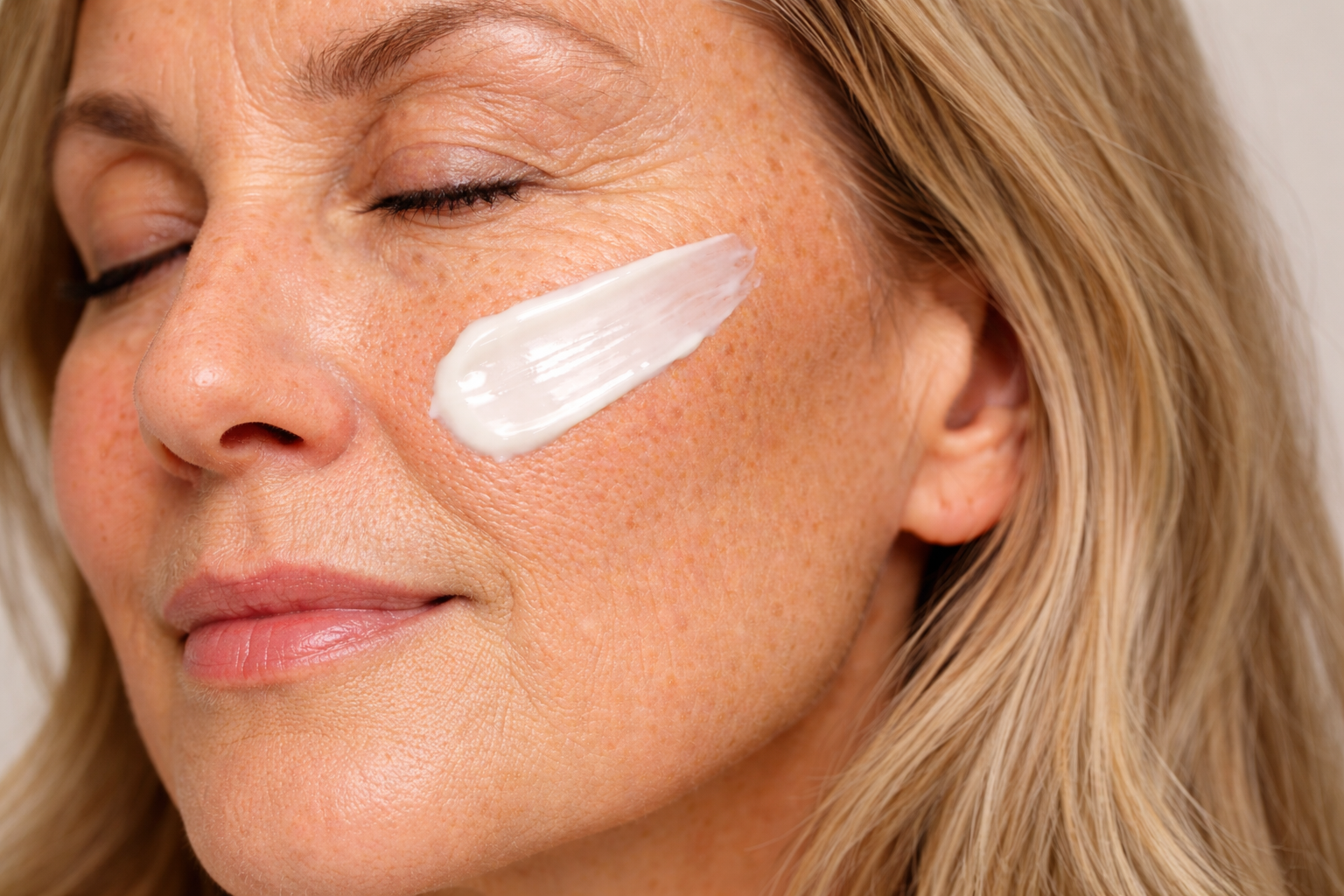
If you’ve been doing all the right things — moisturizing diligently, layering on SPF daily, and maybe even trying pore-shrinking treatments — but your pores still look stretched or more noticeable than they once did, that’s completely normal.
In my 40s, I went through the exact same experience. I was doing all the “right” stuff, but somehow, my nose and cheeks still looked congested and textured. That’s when I realized most advice about pore skin care is based on teenage acne logic (strip oil! scrub more! dry it out!) — and that simply doesn’t work anymore.
Learning how to approach pore skin care in mature skin became less about chasing tightness and more about understanding how pores change with age — and what a balanced, supportive routine really looks like.
If you’ve already built a solid foundation with a balanced routine (like I shared in my guide to the best skin care routine in your 40s), then refining your pore strategy is the next natural step.
Why Pores Look Larger (And It’s Not Just Oil)
Let’s clear this up: pores don’t truly grow bigger over time. What happens is more structural.
In youth, skin is like a new elastic band — firm, bouncy, and supportive. That support holds pores in a tighter, more circular shape.
But as we age, collagen and elasticity naturally decline. Skin loses that tight support, and pores can start to look stretched or teardrop-shaped. At the same time, our skin’s natural exfoliation slows down. Dead skin and sebum don’t clear as quickly, so congestion lingers deeper in the pore.
That’s why blackheads, grayish plugs, and stubborn clogged pores become more common — and more frustrating — even when you’re doing all the “right” things.
So the real issue with pore skin care in your 40s isn’t just oil production — it’s:
- Sluggish internal flow
- Weak structural support
- Dehydration of surrounding skin
That means an effective pore skin care routine needs to clear what’s inside the pores and support the skin around them, not just strip oil.
How Pore Care Changes in Your 40s
Once I understood that, my approach to pore skin care shifted from aggressive to strategic and supportive. Instead of smothering my face in acids everywhere, I learned to:
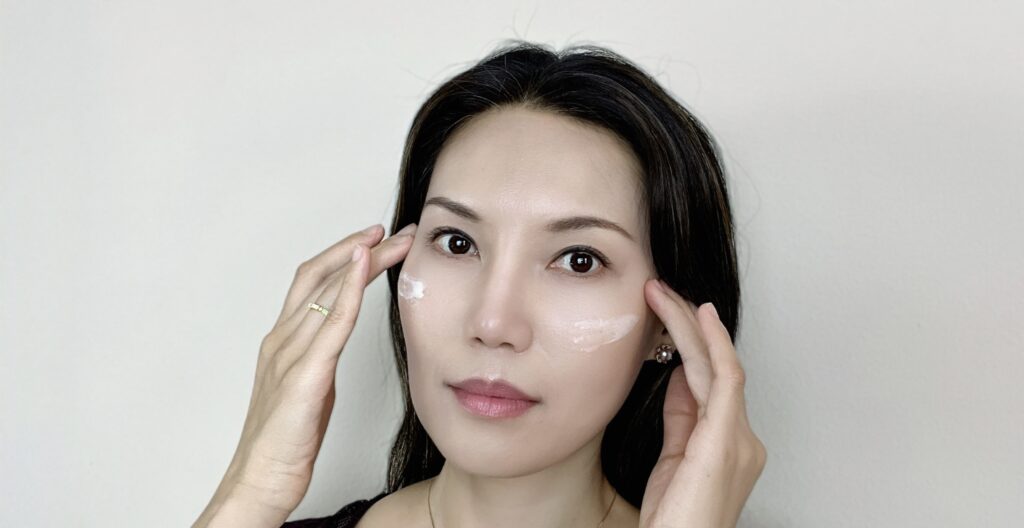
- Clear congestion where it matters
- Hydrate deeply afterward
- Support my barrier so my skin isn’t stressed
This is the exact routine I’ve been using on my own 41-year-old skin — and it’s made a noticeable difference over time.
Step 1: Cleanse Smart (Not Harsh)
If you want to target the stuff inside your pores, the cleanser has to actually reach in there. That’s why I use CeraVe Salicylic Acid Cleanser — it feels gentle, but it really gets into the oil build-up without stripping my skin.

I think of it as a bridge cleanser: it contains salicylic acid to dissolve buildup inside the pore, and it also has ceramides and hydrating support so my skin barrier stays intact.
Here’s how I use it:
- 2–3 nights per week
- On damp skin
- Gentle massage (especially around the nose and cheeks)
- No harsh scrubbing
💡 Tip: If your skin feels tight after rinsing, move this to fewer nights. Mature skin doesn’t need strength as much as strategy.
Step 2: Zone Your Exfoliation
This was a huge realization for me: you don’t need to exfoliate your entire face to improve pores.
I used to coat my whole face in acids — even where my skin was already fine or thin. That only made things worse.
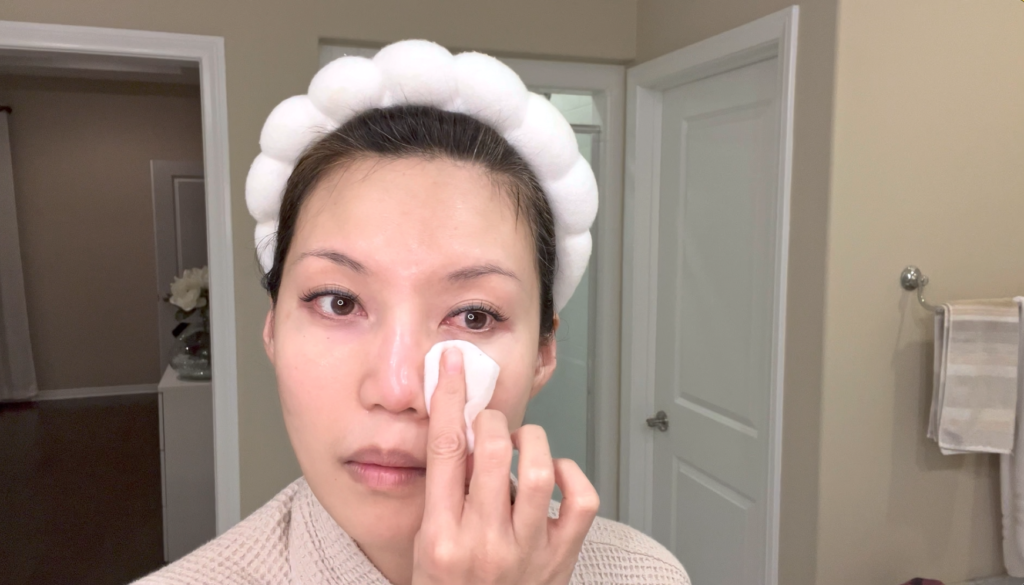
Now, I reserve exfoliation for problem zones — where my pores are most visible.
On those nights, I use Paula’s Choice Skin Perfecting 2% BHA Liquid Exfoliant — but only on:
- Around my nose
- Inner cheeks
- Between my eyebrows
- Under my lower lip

This leave-on BHA continues clearing inside the pore instead of just on the surface.
But here’s the nuance: over-exfoliation inflames and slightly swells skin, which makes pores look more obvious. So targeted use is key in any balanced pore skin care plan.
And if I’ve already used the salicylic acid cleanser that night, I cut way back on the leave-on BHA. It’s less product, better tolerance, and a healthier skin barrier.
The Hydration Mindset That Changed Everything About Pore Skincare
Once the pores are clear, the game changes.
Empty pores look smaller when the skin around them is plump and hydrated.
Think of a grape vs. a raisin: they’re the same size, but the grape surface looks smooth and firm — the raisin looks textured and shrunken.
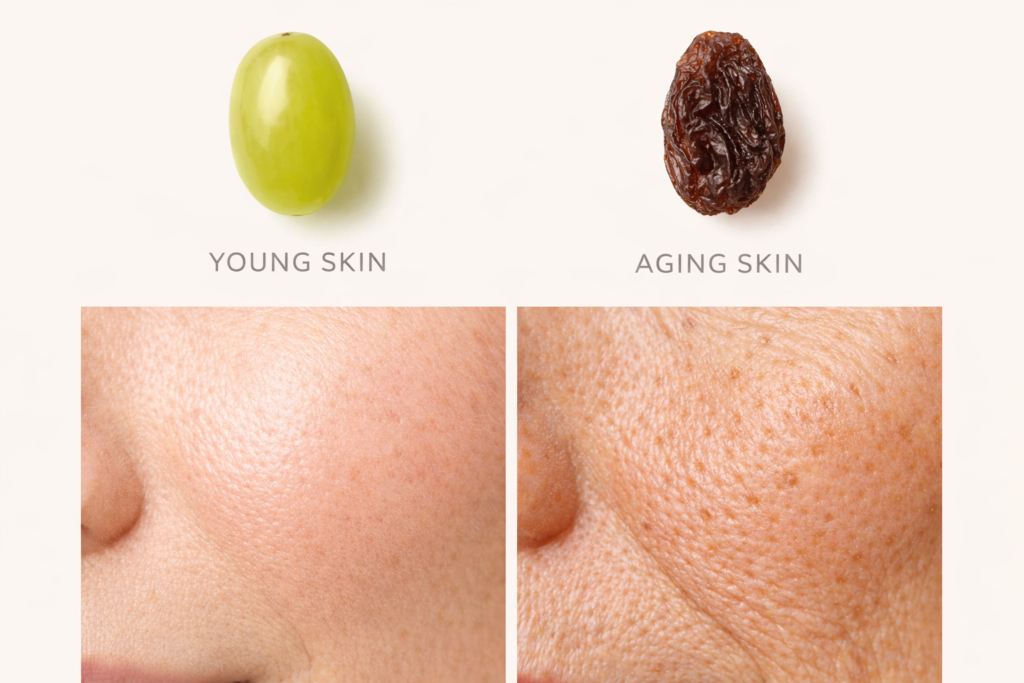
That’s exactly what stubborn pores on mature skin look like when there isn’t enough hydration and barrier support.
This is the part of pore skin care that almost no one explains clearly.
Step 3: Hydrate (And Don’t Skip This)
Right after exfoliating, I apply COSRX Advanced Snail Mucin Power Essence.
Yes, snail mucin sounds quirky — but it’s one of the most calming, deeply hydrating ingredients I’ve found.
It:
- Holds onto water
- Helps repair barrier function
- Feels very lightweight
- Doesn’t clog pores

Hydration here isn’t luxury — it’s functional. It smooths texture, helps prevent congestion from building back up, and makes the pore openings look visibly smaller.
I press it over my entire face and down my neck.
But hydration doesn’t seal itself in…
Step 4: Seal and Support
After hydration comes barrier reinforcement.
I use SKIN1004 Madagascar Centella Soothing Cream, which feels soothing and supportive without heaviness.

Centella is great for:
- Calming irritation after exfoliation
- Encouraging skin healing
- Supporting barrier integrity
I warm a small amount between my fingers and gently press it into my face and neck — especially where I used BHA.
This step is where I truly saw longer-term improvement. Barrier strength equals smoother, calmer skin — which shows up as refined texture and less obvious pores.
A Tiny Extra for Overnight Lock-In
On nights when my skin feels extra dry, I add just one drop of Kate Blanc Cosmetics Castor Oil over my moisturizer.
Castor oil has a low comedogenic rating, so it doesn’t undo the work I just did. It simply acts as a thin seal to help keep moisture from evaporating overnight.
This is optional, but it’s one of those small tweaks that helps mature skin feel supported and balanced long-term.
What Not to Do (Because It Matters)
If your goal is to improve your pore skin care results and visually reduce the look of large pores, here are a few things I avoid:
- Daily high-strength acids across the entire face
- Harsh physical scrubs
- Skipping moisturizer after exfoliation
- Treating every area the same (thin skin shouldn’t get aggressive acids)
- Expecting massive change overnight
Pores don’t shrink permanently — but you can improve how they look by keeping them clear and supporting your skin around them.
Final Thoughts on Pore Skin Care
The biggest lesson I learned about pore skin care?
This isn’t a quick fix — it’s a smart, consistent rhythm.
When I approach pores with clarity, hydration, and support instead of stripping and attacking, my skin actually responds.
Fewer blackheads. Smoother texture. Pores that look smaller because they’re cleaner and the surrounding skin is healthier.
And that’s the truth about pore skin care no one explains clearly: it’s not about shrinking your pores — it’s about caring for them intelligently so your skin looks smoother, calmer, and stronger over time.